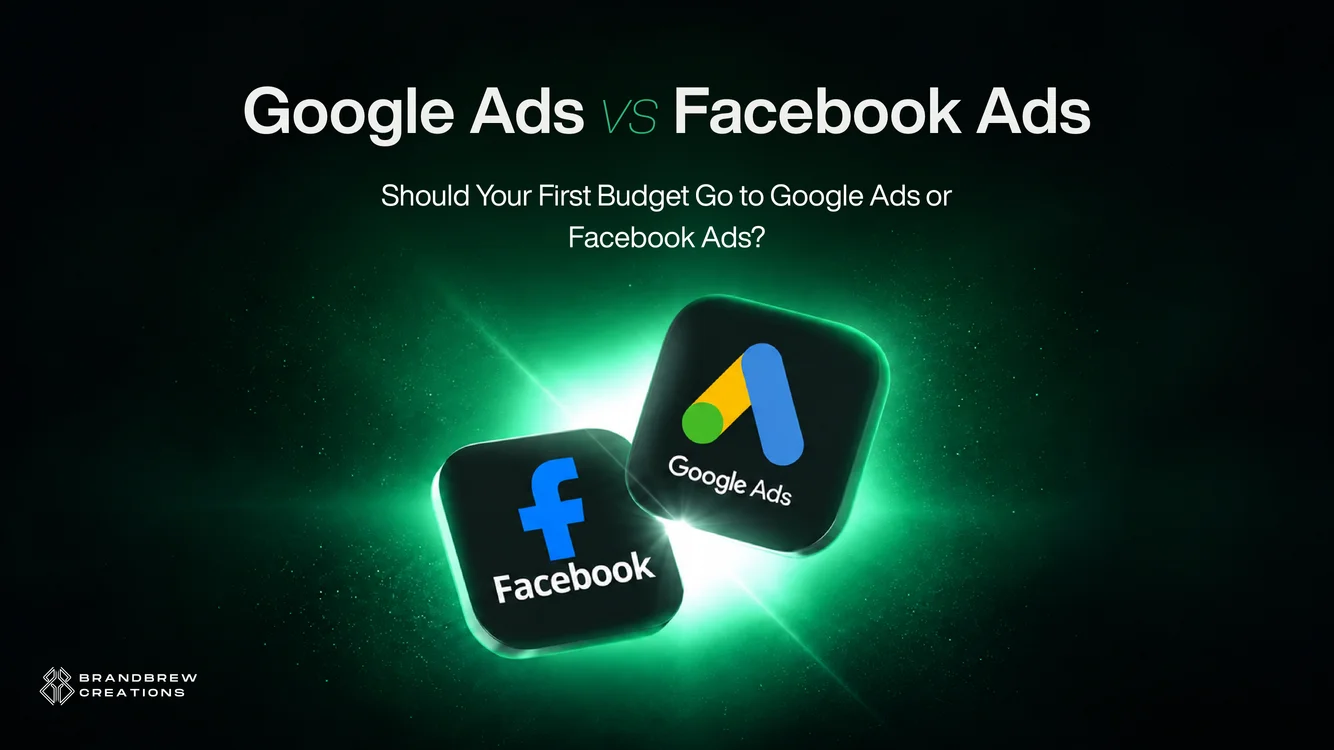
Google Ads vs Facebook Ads is rarely a contest between two platforms. It is a choice between two kinds of buyer: the one already looking for you, and the one who doesn’t know they need you yet.
Your first budget should follow the buyer you can win soonest. Five questions about your product and your market decide which one that is.
Difference Between Google Ads and Facebook Ads
Google and Facebook reach people at different moments. One answers a search; the other interrupts a scroll.
Google Ads Reach People Already Searching
Google’s search campaigns reach people while they are searching on Google for the products and services you offer. The demand already exists; the ad competes to capture it.
That makes Google strong for products people know they need. It also means Google can’t sell what nobody searches for.
Facebook Ads Reach People Not Searching Yet
Facebook and Instagram reach people by who they are and what they do, not by what they typed. Meta’s awareness objective, for example, is built to reach the largest number of people likely to remember your ad.
That makes Facebook strong for creating demand: showing a product to people who didn’t know it existed. It also means many of them aren’t ready to buy today.
Which Is Better, Google Ads or Facebook Ads?
Neither platform is better in general. Answer these five questions, and the first budget picks itself.
1. Do People Search for What You Sell?
If people type your product or service into Google, Google can catch them at the moment of need. If almost nobody searches for it, there is little demand on Google to capture.
A new product category usually needs Facebook first, to make people aware it exists.
2. Is Your Product Understood at a Glance?
A product that sells itself in an image or a short video suits Facebook, where people decide in a second whether to stop scrolling. A service that needs explaining often converts better on Google, where the buyer arrives with a question.
3. How Long Is the Buying Decision?
Short decisions, such as clothes, gifts and small home items, can close in one Facebook session. Long decisions, such as clinics, property and education, involve searching and comparing, and Google catches the buyer during that comparison.
4. What Is Your Margin per Order?
A thin margin leaves little room for ads that build interest before the sale. It favors Google, where the click comes closer to buying.
A healthy margin can fund Facebook’s longer path from first sight to first order, and the audience it builds along the way.
5. Cash on Delivery or Online Payment?
Under cash on delivery, every order is a promise until the parcel is accepted. Impulse orders from a scroll can carry weaker commitment than orders placed after a search.
Compare the platforms on delivered orders, not on orders placed. The cheaper platform on the dashboard may be the more expensive one at the door.
Why Cost Per Click Misleads the Comparison
A Facebook click can cost less than a Google click. That comparison tells you little.
A Google click comes from someone searching for what you sell. A Facebook click comes from someone who stopped scrolling. Divide each platform’s spend by its delivered orders, and the ranking can reverse. Our breakdown of Facebook advertising cost in Egypt shows why the price of a click is the easiest number to misread.
When to Run Google and Facebook Ads Together
An established business usually ends up on both platforms. The order and the split decide whether the two work together or compete for the same budget.
Facebook Builds Demand, Google Captures It
Facebook introduces the product to people who didn’t know it. Some of them later search for it, and Google is there when they do.
Run alone, each platform misses half of that path. Run together, one feeds the other.
Splitting the Budget by Funnel Stage
Split the budget by stage, not by habit. Awareness and interest go to Facebook and Instagram; search and the final decision go to Google; retargeting runs on both.
Move the split as the numbers come in. The platform bringing delivered customers at the lower cost earns the next share of budget.
Google Ads vs Facebook Ads for Egyptian Businesses
An established business has search demand, past customers and data that a new one lacks. Two situations shape where its budget should go.
Before a Seasonal Peak in Sales
Weeks before the season, Facebook builds the audience while attention is cheaper. When the season opens, Google catches the searches and retargeting brings back the people Facebook warmed up.
Starting both at the peak means paying the season’s prices on both platforms at once.
When a Competitor Goes Digital
When a competitor starts advertising, protect your own name on Google first: people searching for you shouldn’t land on the competitor’s ad. Then study what the competitor’s Facebook ads promise before you answer them, as our guide to competitor analysis explains.
Running Google and Facebook Together Is a Double Burden: Why Hand It to Specialists
Two platforms mean two sets of campaigns, two ways of targeting and two ways of counting results.
Two Platforms With Different Logic for Targeting and Measurement
Google targets by keywords and searches; Meta targets by people and behavior. Each measures conversions its own way, and both claim credit for the same sale.
Comparing them fairly takes your own sales data, not either dashboard.
A Budget Split by Guesswork Lands on the Wrong Platform
A split made once and never revisited keeps funding the weaker platform. Each month the gap costs more.
How Brand Brew Takes Google and Facebook Ads Off Your Hands
We plan and run both platforms on one plan, measured against your own sales.
We Work Out the Expected Return From Each Platform Before Splitting the Budget
We start from your product, your margin and your buyers’ path. The first split follows from what each platform should return.
One Team Runs Both Platforms on One Plan
One team runs your Google Ads and your social media advertising, so the two work as one funnel.
We Move Budget Between Them Based on Cost per Customer
We compare the platforms on delivered customers every month. Budget moves to the one bringing them at the lower cost.
Is Google Ads better than Facebook Ads?
Neither is better in general. Google suits products people already search for and decisions that involve comparison; Facebook suits products understood at a glance and demand you need to create. An established business usually gets the best result from both, in the right order.
How much do 1000 clicks cost on Facebook?
There is no fixed price. Meta prices every impression in an auction, so the cost per click changes with the audience, the season, the objective and the ad itself. Multiply your own account’s cost per click by 1,000 for an estimate, then judge it by the delivered orders those clicks bring.
Start by Finding Out Where Your First Budget Should Go
Your product, your margin and how your buyers decide already point to one platform first.
Tell us what you sell and how your customers buy, and we’ll show you where the first budget should go and what it should return.