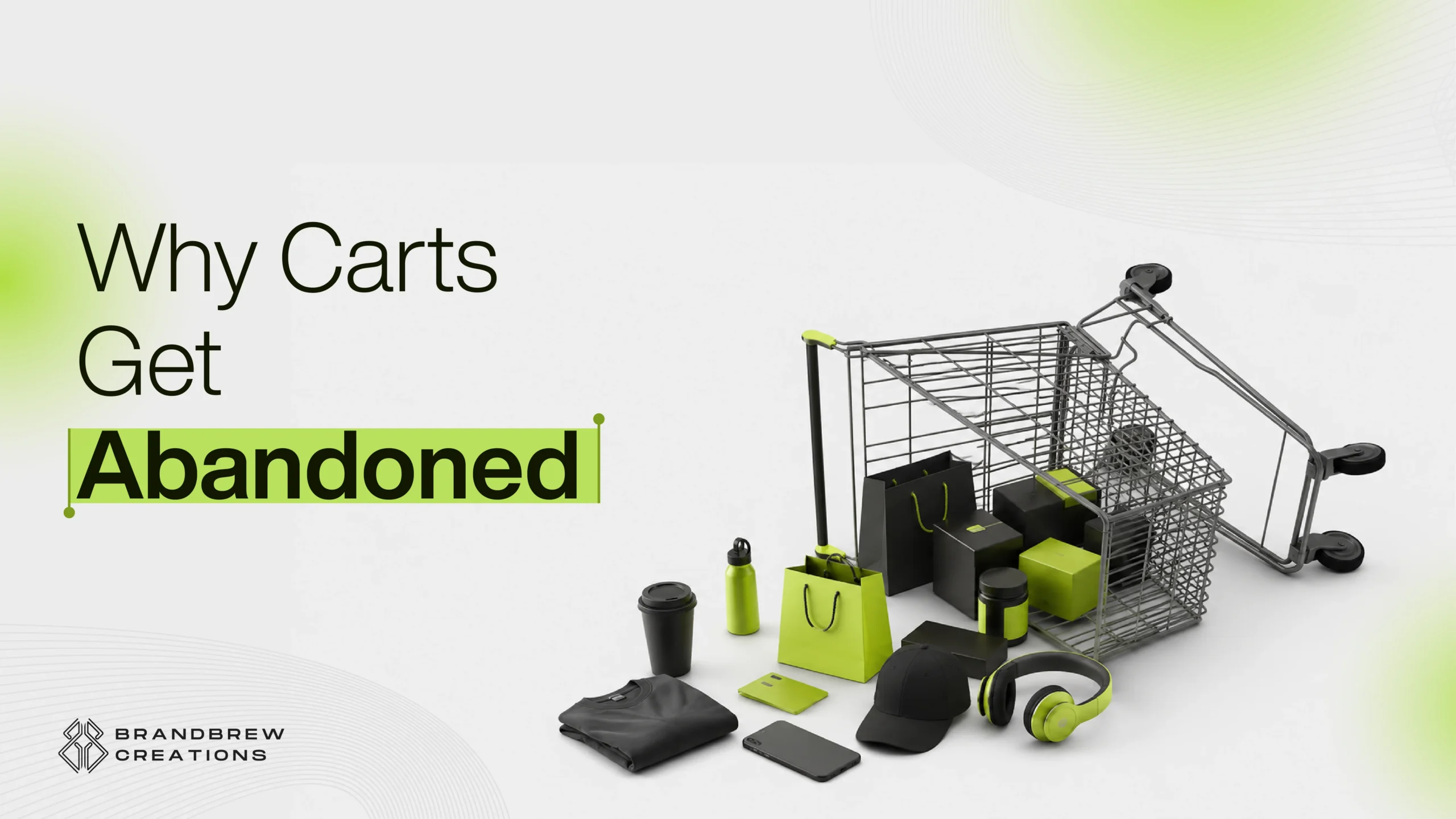
A hundred customers enter your store’s cart in a day, and only thirty reach order confirmation. The other seventy did not change their mind about the product. They already picked it and entered their details. Something in the last two screens stopped them, and that is what we call cart abandonment.
It is the most expensive moment in your store, because the customer arrived there after you paid the full cost of attracting them.
What Does Cart Abandonment Mean and How Do You Measure It?
The customer adds a product to the cart, starts the purchase steps, then leaves before paying. You calculate the cart abandonment rate by dividing abandoned carts by carts opened, then multiplying by a hundred.
But track the step where the customer leaves, not the percentage alone. Each step points to a different problem, and needs a different decision.
Why Does Knowing the Reasons for Cart Abandonment Matter?
Plenty of store owners treat the abandonment rate as a number they watch and never act on. It is in fact the cheapest source of growth available to you today, for five reasons:
1. You Already Paid in Full for This Customer
A customer who reached the cart cost you the ad, the visit, and the browsing. All that remained in their journey was a screen or two.
Their exit here means you carried the full cost and got zero revenue. A visitor who left from the first page cost you far less, because they consumed only the start of your journey.
2. Raising Completion Is Cheaper Than Doubling Traffic
Compare the two routes with a simple number. If 100 customers reach the cart and 30 complete, and you lift completions to just 36, you gained a 20% rise in orders with no extra advertising EGP.
To get the same six orders through advertising, you would have needed 20 new carts, at full acquisition cost for each one. The difference between the two routes is the difference between improving an experience and buying growth.
3. The Number Tells You Where the Problem Is, Not Just That It Exists
The cart abandonment rate is not a general indicator like sales. It attaches to a specific step on a specific screen, and you can see exactly where the customer stops.
That turns the problem from a complaint into a task. Instead of “my sales are weak”, you arrive at “40% of customers leave at the shipping screen”, and that is a sentence you can act on today.
4. It Separates an Experience Problem From a Demand Problem
A store pulling traffic and not selling faces two possibilities: a product nobody wants, or a broken purchase path. The abandonment rate separates them.
A customer who added the product and reached payment proved they want it. If they left after that, the problem sits in the path rather than in the product or the demand. Diagnosing visits that never turn into sales starts from that distinction.
5. It Stops You Spending More Into an Open Leak
Doubling the ad budget while the path stays as it is doubles both the orders and the loss. The share leaking away stays exactly the same, and its value in EGP rises because the volume grew.
Fix the path first, then double the spend. Every improvement in completion lifts the return on every EGP you spend after it, not the ones you spent before.
The Top 5 Cart Abandonment Reasons in the Egyptian Market
The Baymard Institute asked shoppers why they abandoned the cart, and extra costs came first at 40%, then slow delivery at 20%, distrust in entering card details at 19%, being asked to create an account at 18%, and a long checkout at 17%.
But that order changes in the Egyptian market, because the customer here settles the decision at the front door rather than at the screen.
1. No Cash on Delivery Option, or Surprise Fees on It
A customer used to not paying before seeing the product will not type their card details into a store they are dealing with for the first time. And if they find the option available with an extra fee you never announced upfront, they read it as a penalty on the payment method they trust.
Jumia, listed on the New York Stock Exchange and operating across several African markets including Egypt, states in its annual report filed with the US Securities and Exchange Commission that many of its customers hold no bank account or do not trust paying online. It adds that prepaid orders achieve far higher successful delivery rates, and cut order fulfilment costs.
2. Shipping as a Share of Order Value
Unexpected extra costs topped the list of cart abandonment reasons by a wide margin, and shipping fees are their clearest form.
Delivery costs roughly the same whether the order is large or small. Jumia disclosed its fulfilment cost per order in the last quarter of 2025: 1.97 dollars, down 12% year on year, calculated after excluding JumiaPay app orders that carry no logistics cost. The smaller the order, the higher the share shipping takes of it. So when that share appears late, after the customer has picked their governorate, they see it as a sudden price rise rather than a service cost.
3. A Vague Delivery Date
“3 to 7 days” is not an answer. It is a range that leaves the customer with no certainty. A customer who does not know when the order arrives postpones the decision, and postponing here means leaving the page.
4. Address Confusion
Addresses in Egypt follow no single format, and many checkout forms assume a clear street name and building number exist. So when the customer faces a field they do not know how to fill, they stop or enter an incomplete address. That is the same problem that breaks delivery later.
5. Limited Digital Payment Methods
The financial inclusion rate in Egypt rose to 77.6% by the end of December 2025 after standing at 27.4% in 2016. Offering multiple payment methods is no longer a luxury.
The Egyptian market holds 55.5 million mobile wallets, 16 million InstaPay users, and more than 40 million transactions through Apple Pay worth over 32 billion EGP up to June 2025, all of them figures published by the Central Bank. A store offering only one or two options excludes part of its customers at the very last step.
5 More Reasons That Repeat in Every Market
The five reasons above belong to how buying works in Egypt specifically. The next five relate to how the checkout page itself is built, and they appear in any store whatever its market.
6. A Complicated, Long Purchase Journey
A long checkout came in at 17% on Baymard’s list. The problem is not the number of screens alone, but the volume of decisions you ask of a customer who has already made theirs.
Review three things in your path:
- Field count. Every extra field is a chance to stop. Delete whatever you do not genuinely need to fulfil the order, and do not ask for company name or date of birth unless you will use them.
- Step order. Put what concerns the customer first and what concerns payment last, and show the final cost before you ask for any sensitive detail.
- Clarity of position in the path. Show the customer the current step number and how many remain. An open-ended path with no known end pushes them out before they learn how much is left.
And make going back possible without losing what they typed. A customer who went back to correct their address and found empty fields will not fill them a second time.
7. Site Performance Problems
A slow store loses its customers at the exact moment the customer is ready to pay. The effect of slowness here is harsher than on any other page, because the customer is waiting with their details already typed.
The problem shows in four forms:
- Slow loading of the checkout page itself, especially on mobile and on average networks.
- A confirm button that fails, or repeated presses with no response, leaving the customer afraid they paid twice.
- Losing the cart contents when the page refreshes or they step back.
- A form that does not work on a mobile screen, with narrow fields and a keyboard covering the submit button.
Test the full checkout path from a real phone on an ordinary network, not from a desktop on a fast one. The customer’s experience happens in the first setting, not the second.
8. Missing Trust Elements on the Checkout Page
Distrust in entering card details came in at 19% on Baymard’s list. The customer here does not doubt your product. They doubt the safety of the step they are standing on.
Show what reassures them on that screen rather than on another page: the site security certificate, the logos of known payment methods, a real phone number, and a physical business address. A store you cannot reach outside the internet looks harder to hold accountable.
And add proof that others bought and you delivered: verified ratings, the number of orders fulfilled, and photos from real customers.
These elements belong to the payment moment specifically, and differ from product quality proof on the product page itself, a subject we covered in our article on visits that never turn into sales.
9. Forcing the Customer to Create an Account
Being asked to create an account came in at 18%, and it is a different reason from a long path. A long path tires the customer. A mandatory account stops them at a gate before they begin.
The customer refuses it for three combined reasons:
- It asks for a commitment they do not want. They came to buy once, and found you asking for a permanent relationship and a new password to remember.
- It raises the privacy question. The customer understands their data will be stored and messages will follow, and they have not agreed to that yet.
- It adds steps unrelated to buying, like email confirmation or a verification code, and every one of them is a chance to leave.
Allow guest checkout first, and offer account creation after the order completes rather than before. A customer who has already paid is far readier to save their details, because they see a clear benefit for the next order.
10. No Returns Policy or Warranty
Before paying, the customer faces one question: what if I do not like it? The absence of an answer makes them assume the worst, which is that the money is gone for good.
Write the policy in language understood on first reading, and answer four things in it: the return window in days, who carries the shipping cost on a return, the condition requirements for the product, and how long a refund takes.
And show it on the checkout page itself as one expandable line, not as a link in the site footer. The customer does not leave the payment screen to hunt for your policy. They leave it entirely.
Define the warranty the same way: its length, what it covers, and who honours it. A vague warranty reassures nobody, and may raise doubt instead of removing it.
The Abandoned Cart That Was Never Abandoned
Here sits a point that changes the reading of the whole number.
Some “abandoned carts” on your analytics dashboard were never abandoned. The customer completed their purchase, somewhere else. Stores running Facebook and Instagram pages and a WhatsApp account receive part of their orders in messages rather than on the checkout page.
The customer browses the site to see the product, moves to WhatsApp to ask about the size or the delivery date, and completes the order there.
If you do not measure that shift, you see a high abandonment rate while the sale actually happened. And the difference between the two readings changes your decision: the first pushes you to edit the checkout page, the second pushes you to measure an entire channel missing from your reports.
Why Does the Effect Double With Cash on Delivery?
The loss does not end at the abandoned cart if you rely on cash on delivery. Jumia discloses in its annual report filed with the US Securities and Exchange Commission a metric it calls CFDR, covering cancellations, failed deliveries and returns. It reached 24% of orders in 2025 after standing at 23% in 2024. That is roughly one order in every four, at a company running its own logistics network alongside delivery partners.
So you have two leaks rather than one: customers leaving before confirmation, and customers confirming then refusing the delivery. Each has a different cause and a different fix, and merging them into one number hides which one costs you more.
What Do the Data Reveal That Observation Does Not?
Analyse the payment journey step by step and you will see which screen the customer stops at. And look at whether the stopping repeats within one category or scatters randomly. That difference alone decides whether the problem sits in the step’s design or in that category’s intent.
The questions that open the diagnosis are clear: which governorate records the highest drop-off rate? Does behaviour differ between mobile and desktop? And how many “abandoned” orders completed in a chat?
Baymard Institute measurement, built on auditing checkout paths across 60 leading sites, points to the average site holding 39 potential improvement points in the checkout steps alone. Which means the leak happens at specific measurable points rather than across the whole product.
How Brand Brew Reads Your Abandoned Carts
We separate the numbers from each other first: how many carts were genuinely abandoned, how many moved to another channel, and how many orders completed then got refused at the door. Three different numbers, and each one leads to a different decision.
Then we pin down exactly where you lose the money, and tie that to the data of the campaigns that brought those customers. Part of the leak starts before the cart, from targeting that brought a visitor who was never ready to buy.
What is a normal cart abandonment rate?
The global average sits around 70%, but the right rate for you depends on your sector and how payment works in your store. Relying on cash on delivery raises the number by its nature, so compare your rate against its own direction over time.
Why does knowing the reasons for cart abandonment matter?
Because that customer cost you the full price of attracting them and gave you no revenue. And because raising completion is cheaper than doubling traffic: converting 6 extra customers out of every 100 who reach the cart lifts your orders 20% with no new ad spend. The number also tells you at exactly which screen you lose the customer.
Why does the customer abandon the cart after entering delivery details?
Because the purchase decision completes at the last screen, not at product selection. That is the moment unexpected shipping cost appears, or the payment method they trust is missing, or they find the delivery date vague.
Does forcing account creation hurt sales?
Yes. Being asked to create an account came among the top cart abandonment reasons at 18% in Baymard’s survey. Allow guest checkout, and offer account creation after the order completes rather than before.
Does every abandoned cart mean a lost sale?
No. Some customers use the cart for comparison or planning, and some complete the order on WhatsApp or in direct messages. Separate the three: a genuinely abandoned cart, a comparison cart, and an order that completed in a chat.
What is the difference between cart abandonment and refused delivery?
Cart abandonment happens before order confirmation. Refused delivery happens after the shipment arrives. The first is a problem in the purchase experience, the second a problem in expectation or post-order communication. Fixing one does not fix the other.
Start From the Right Number
A high cart abandonment rate is not a verdict on your store. It is a number that needs breaking apart before you build a decision on it. Book a 20-minute diagnostic call with Brand Brew, and we will show you in numbers where you lose the orders: before confirmation, or after it at the customer’s door.