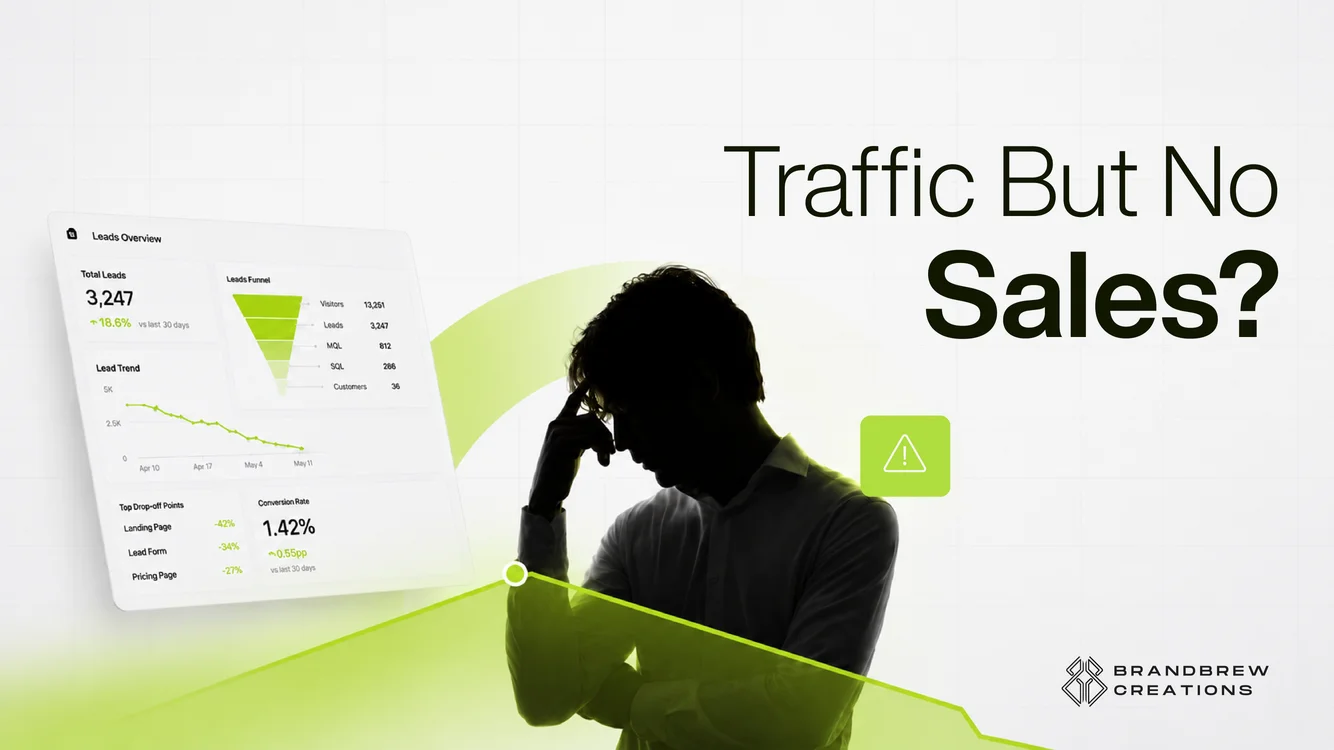

Your sales have started slipping, and you’re not sure yet whether it’s seasonal and will pass, or whether it’s a deeper problem that will keep growing if you don’t act on it. That distinction matters, because it decides whether you wait for things to improve on their own or take action now. This article breaks down what causes declining sales, how to tell a temporary dip apart from a sustained decline, and why your competitor keeps gaining the market share you’re losing.
The difference between a temporary dip and a sustained decline in sales
A temporary dip is usually tied to a clear, time-bound factor: a weak buying season, a short-term economic shock, or an extended public holiday. The tell is that sales return to their normal level once that factor passes, and the pattern tends to repeat at roughly the same time every year in your sales data.
A sustained decline is different. It’s a gradual, consistent drop over several consecutive months that doesn’t bounce back even after the seasonal factor is gone. Here the cause is usually structural: a shift in market behavior, a more digitally active competitor taking your share, or an internal breakdown in marketing or customer experience. You can’t tell the two apart by instinct — it requires comparing your sales data against the same period in previous years.
Early warning signs of declining sales before they worsen
Before a decline reaches a point that threatens your business, it’s usually preceded by a set of signals: a gradual drop in average order value, a rising share of one-time buyers who never return, a slowing conversion rate from traffic to actual sales, and a month-over-month decline in repeat customers. Any one of these on its own might be normal, but two or three appearing together in the same period usually means a problem is forming and needs diagnosis before it becomes a full sales crisis.
What causes declining sales
Market and competition factors
Markets shift constantly: a new competitor enters with a stronger offer, an existing one ramps up its digital presence, or customer expectations rise above what your business currently delivers. Any of these shifts reduces your share of the market even if your own business hasn’t changed at all.
Shifting consumer behavior and the move to digital buying
Customers who used to buy the traditional way now compare prices online, read reviews before deciding, and expect a smooth digital purchase experience. A business still relying on the same outreach approach it used years ago loses ground to a competitor who read that shift early and moved faster.
Economic factors and weaker purchasing power
Weaker purchasing power changes how customers prioritize spending, pushing them to delay non-essential purchases or look for cheaper alternatives. This factor sits outside your direct control, but how you respond to it shows up in how flexible your offers, pricing, and messaging are during that specific period.
Internal causes in marketing and customer service
Often the cause isn’t external at all. Unclear messaging, imprecise targeting that reaches people who were never interested, or a weak customer service experience can stop a customer from completing a purchase or coming back. These causes are easier to fix than market-driven ones, but they need precise data diagnosis to pinpoint exactly where they’re happening.
Technical causes and the absence of data
A business operating without clear measurement of each marketing channel’s performance, without tracking how customers actually behave on its website, and without connecting sales data to marketing data, is effectively making decisions blind to what’s really happening. Missing data isn’t a direct cause of declining sales, but it’s the reason the other causes go undetected for too long.
A Company That Ignored the Shift Until It Was Too Late
Blockbuster once dominated video rental with more than 9,000 stores worldwide, while Netflix was a small startup. Blockbuster’s leadership believed its store-based model would stay dominant and even turned down a chance to buy Netflix for $50 million, judging the price too high. By the time Blockbuster tried to compete with streaming, most customers had already switched, and the company filed for bankruptcy in 2010. Forbes’ analysis of Blockbuster’s failure shows the decline wasn’t sudden — it was a slow shift the leadership dismissed as a passing trend.
Why your sales drop while your more digitally active competitor grows
A competitor investing in their digital presence builds a direct relationship with the same audience you’re targeting, and reaches them at the exact moment they’re searching for a solution. When your business is less digitally active, you’re not just missing new sales opportunities — you’re leaving the field open for your competitor to build trust with the customers who should have been yours. Over time that gap widens, because the competitor keeps compounding data and trust while you keep trying to catch up from a weaker position each time.
Is the problem your product and pricing, or your marketing?
This question matters because the answer determines the entire direction of the fix. If your competitor sells at the same price or higher and still captures more market share, pricing usually isn’t the problem. If visitors reach your site or page, engage, but don’t complete the purchase, the issue is in your conversion experience, not the product itself. The only way to answer this accurately is by comparing your own performance data against broader market benchmarks — not by guessing. This mirrors the approach McKinsey’s research on sustainable e-commerce growth takes: tying growth decisions to real market data rather than assumptions.
The cost of ignoring declining sales on your market share and profitability
Every month that passes without a clear diagnosis is a month your competitor cements their position in the same market where you’re losing share. The impact isn’t just the sales lost in that moment — it’s the higher cost of winning that same customer back later, once they’ve grown used to a competitor. This lines up with what Harvard Business Review’s research on why strategies fail found: delaying a strategy review and acting on early signals costs a business far more than the price of catching the problem early. Businesses that move fast on the first sign of decline save themselves a recovery cost that’s consistently higher than the cost of early diagnosis.
Brand Brew’s perspective on diagnosing declining sales and restoring growth
At Brand Brew Creations, we treat declining sales as a symptom, not a standalone problem, and we refuse to propose a fix before understanding the real source of the decline through actual data: the performance of every marketing channel, how customers genuinely behave on your site, and where you stand against the broader market. Every decision we make is grounded in clear numbers, not instinct or copy-pasted solutions from another business. Because our departments work in sync rather than in silos, the diagnosis we deliver translates into one coherent execution plan, not scattered recommendations.
How do you explain a sales decline?
A sales decline is best explained by comparing current performance against the same period in prior years and isolating which factor changed — market conditions, consumer behavior, internal execution, or data visibility — rather than assuming a single cause.
What should I do about declining sales?
Start by diagnosing whether the decline is temporary or sustained, then compare your channel-level data to identify exactly where the drop is happening before choosing a fix.
What are the most common sales problems?
The most common are a more digitally active competitor gaining share, a shift in how customers buy, weaker purchasing power, internal marketing or service gaps, and a lack of data to catch the problem early.
How do you explain low sales performance?
Low sales performance usually traces back to a mismatch between what the market now expects and what the business is currently offering — in product, pricing, marketing, or customer experience — and the exact mismatch only becomes clear once you look at the data.
Declining sales isn’t inevitable — it’s a signal telling you something needs fixing now, before the gap with your competitor grows any wider. If your business has been slipping and you’re not sure exactly why, book a free 20-minute diagnostic call with Brand Brew, and we’ll show you, with real numbers, exactly where your sales are leaking.