There’s a real difference between one strong sales month and growth that actually lasts. Plenty of stores see a temporary spike in sales because of a promotion or a season, then slide right back to their old level or lower. This article breaks down the difference between sustainable growth and a temporary spike, and the pillars an online store genuinely needs to grow continuously rather than seasonally.
What do we mean by sustainable sales growth versus a temporary spike?
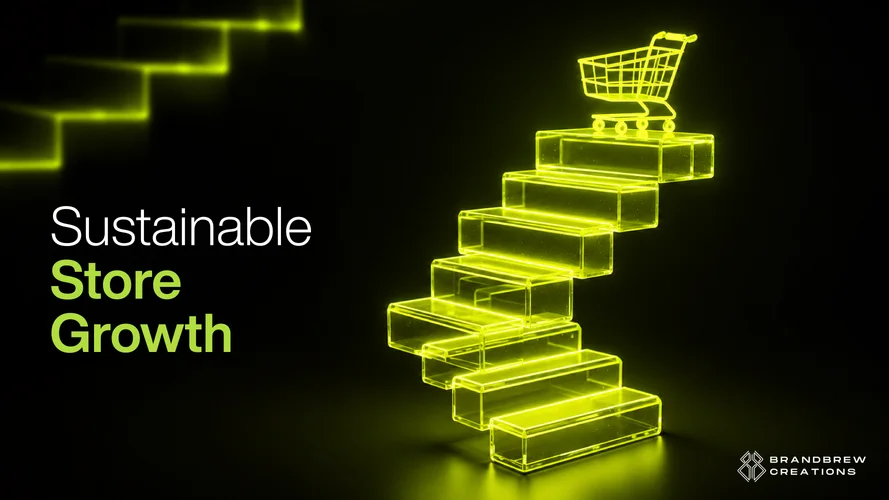
A temporary spike happens because of a time-bound factor, like a discount or a seasonal event, and levels drop back to normal once that factor ends. Sustainable growth is different: it’s a gradual, consistent increase in sales, built on real improvements to the customer experience and market targeting, not a temporary trigger. The difference shows up in whether the result holds once any specific campaign ends.
A Company That Grew Fast But Whose Economics Collapsed
Groupon grew faster than almost any company in history, reaching 35 countries and over 80 million subscribers within a few years, and going public at a $13 billion valuation. But Wharton’s analysis of Groupon’s business model points to a structural flaw: merchants had to offer steep discounts, then hand Groupon a large commission on top, often losing money on every deal — and most customers who came through Groupon were one-time deal-seekers, not loyal repeat buyers. The growth number looked spectacular; the underlying economics didn’t hold up, and the stock later fell more than 97% from its IPO price.
You may also read: Website Traffic but No Sales? The Real Reasons Behind It
Why more traffic alone isn’t enough to increase sales
More traffic only improves one variable in the growth equation — the size of the audience reaching you. If the rest of the experience is weak, more traffic just doubles your marketing cost without doubling sales at the same rate. Sustainable growth needs a balanced improvement across traffic quality, purchase experience, and customer retention after that first purchase.
The pillars sustainable sales growth is built on
A user experience and trust that drive purchase
A smooth user experience and clear trust signals, like reviews and supporting content, turn purchase intent that already exists into an actual decision, instead of leaving it stuck.
Precise targeting that attracts buyers, not just visitors
Targeting built on precise data about who actually buys, not the theoretically broader audience, raises the conversion rate of every new visitor you bring in.
Decisions based on data, not guesswork
Every decision on pricing, offers, or marketing channels needs to be grounded in real, measured performance, not a tactic that worked once or personal instinct.
You may also read: When Does Your Marketing Shift From a Cost to a Profitable Investment?
Why scaling your marketing before your operations are ready hurts your sales in the long run
If you double your marketing spend before your internal operations — shipping, customer service, inventory — are ready to handle a bigger volume of orders, you’ll acquire new customers into a bad experience. A customer who has a bad first experience won’t just fail to return — it also damages your reputation with other potential customers.
How customer retention and loyalty raise average customer value
A returning customer costs far less than acquiring a new one, and tends to spend more with each subsequent purchase. Investing in the post-purchase experience and retaining existing customers raises average customer value over the long run, and that’s a core part of sustainable growth, not a nice-to-have.
You may also read: AI Marketing & Automation in Egypt 2025
How to read your data to find where your sales-growth opportunities are
Comparing performance across every marketing channel, every audience segment, and every stage of the customer journey shows you exactly where the real growth opportunity is: attracting a new audience, improving conversion for your current one, or raising the value of repeat customers.
The impact of ignoring your more digitally active competitors on your sales growth
A competitor investing in their digital presence reaches the same audience you’re targeting and builds continuous growth, while your growth stays seasonal and tied to isolated campaigns. Ignoring that move lets the growth gap between you widen with every season that passes.
Brand Brew’s perspective on growing your website sales sustainably
At Brand Brew Creations, we treat sustainable growth as the result of connected improvements, not a single big campaign. As McKinsey’s research on healthy e-commerce growth shows, balancing growth with profitability requires decisions grounded in real market data, not fast growth at the expense of sustainability. We analyze every element of the customer journey, and Baymard Institute’s checkout usability research confirms that small improvements at specific points in the purchase journey can meaningfully lift conversion rate. Because our departments work in sync, the growth we deliver stays consistent across every customer touchpoint.
How do you increase online store sales?
By improving audience targeting, raising the quality of the purchase experience, and investing in retaining existing customers — not relying on more traffic alone.
How can a website increase online sales?
The best approaches are grounded in real data about customer behavior: precise targeting, a smooth purchase experience, and customer retention programs instead of relying on repeated discounts.
What is the fastest way to increase sales?
Sustainable solutions combine better traffic quality, a better site experience, and higher long-term customer value — not one isolated fix disconnected from the rest.
Real growth isn’t one strong sales month — it’s the result of consistently right decisions compounding over time. Book a 20-minute call with Brand Brew, and we’ll help you build a sustainable growth plan for your store based on your own business’s real data.